When Tamara Blake learned she was expecting triplets, joy quickly met reality.
Multiple babies often mean an early delivery. And early delivery often means a stay in the neonatal intensive care unit (NICU).
On Dec. 31, 2025, as families across west Georgia prepared to ring in the New Year, Skylynn (girl), Elias (boy) and Rylynn (girl) entered the world, weighing just two to three pounds each. Within moments, the three newborns were receiving specialized care in the Sally and John Francis Tanner Neonatal ICU at Tanner Medical Center/Carrollton.
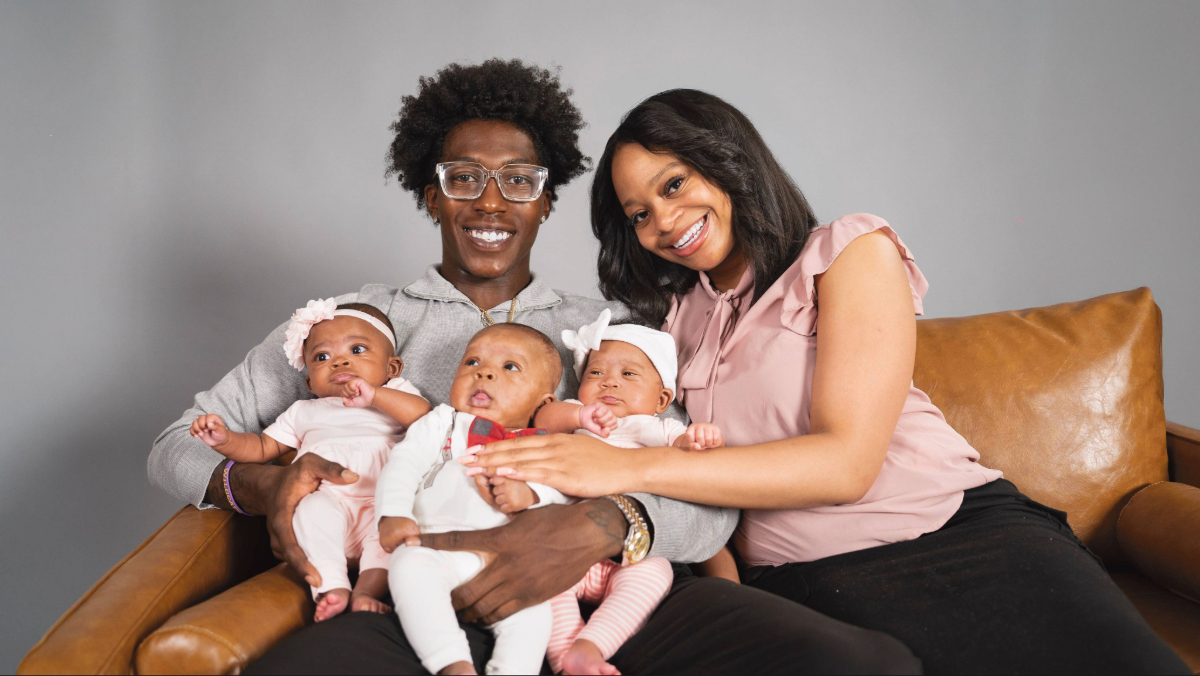 What their parents did not realize at the time was that their children were making history: The newborns became the first set of triplets cared for in the NICU since it opened.
“That shocked me,” said Tamara. “You would think there had already been triplets. It made me feel proud. It felt hometown special.”
But before pride came fear.
“My biggest fear was whether they would have everything they needed,” she said. “It wasn’t just one baby; it was three. I worried about resources. I worried about them being so small. I even worried about each of them getting the same level of attention.”
The uncertainty weighed heavily in those first hours. Tiny incubators. Monitors. The reality that she could not immediately cradle or carry her babies.
“I couldn’t really hold them at first,” said Tamara. “I had to touch them through little openings in their incubators. That was hard.”
Everything began to shift after she toured the NICU and met the team who would care for her children.
“They walked me through everything — the incubators, the monitors, how they would help them grow and transition out,” she said. “Seeing how organized it was and meeting my doctor, Shannon Couvreur, DO, and the entire NICU team helped calm me down and gave me reassurance.”
For Tamara and her boyfriend, Zaylen, one of the greatest comforts was not only the expertise but also the location. Having advanced neonatal care available in Carrollton meant they did not have to travel to Atlanta or another distant city during one of the most emotionally exciting and exhausting times of their lives.
“Leaving your babies at the hospital is already traumatic,” said Tamara. “If I had to drive an hour or more every day on top of that, it would have been so much harder.”
Being close to home meant shorter commutes while she recovered physically. It also meant grandparents could visit, fewer miles on the road and more time at the bedside.
“As parents, we were able to commute easily,” she said. “That made a huge difference. Being close helped us stay strong for them.”
Christi Thompson, RN, NICU nurse manager, says caring for triplets was a milestone, but it was one the team was prepared to meet.
“Our NICU was built to provide high-level, family-centered care right here in our community,” said Thompson. “Families should not have to travel far from home to receive exceptional neonatal care. Supporting all three of Tamara and Zaylen’s babies safely and successfully is exactly why we are here.”
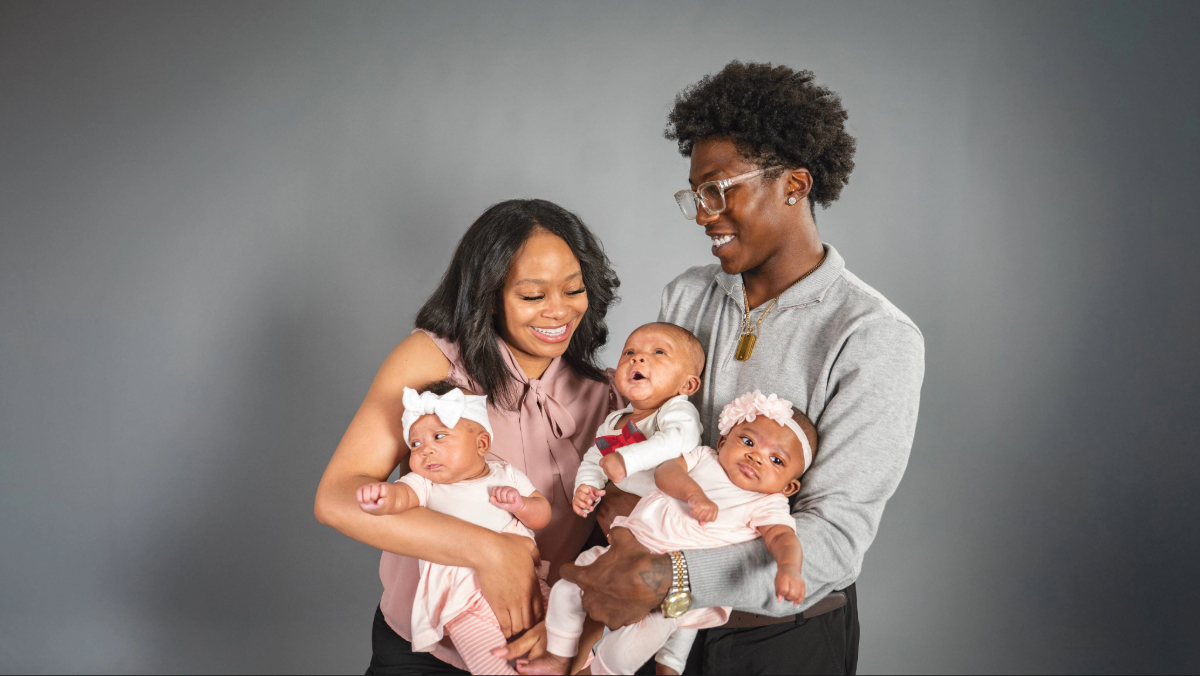 Day by day, ounce by ounce, the triplets grew stronger. Each weight check became a celebration, and each new milestone — from breathing independently to regulating temperature and feeding successfully — marked progress.
“They fought,” said Tamara. “They really did.”
Then came the moment she had been waiting for: the first time she was allowed to hold Rylynn.
“I melted,” she said. “I had a full boo-hoo moment. Just looking at her looking back at me, it was everything.”
Though the babies were discharged on different days, Tamara vividly remembers the moment they were finally all home together.
“That was the best day of my life,” she said. “It felt full circle, like everything we prayed for had finally happened.”
Today, the once two-pound newborns are thriving, weighing between seven and nine pounds. They are even keeping to the same schedule.
“That’s a blessing,” she said with a smile.
Looking back, Tamara says having the Sally and John Francis Tanner Neonatal ICU onsite did not just provide medical care. It provided stability, relief and peace of mind.
“They communicated with us, checked on us and reassured us,” she said. “I never felt alone.”
For families who may one day face a similar journey, she offers simple advice:
“Ask questions, be present and don’t be afraid,” she said. “Your babies still need your voice. They still need you there.”
As the first triplets cared for in the NICU, Elias, Skylynn and Rylynn represent more than a milestone for Tanner. They represent what is possible when hospitals are equipped to deliver high-quality health care and advanced neonatal expertise without families having to leave their community behind.
As for their mother, her message is simple:
“We made it.”
Learn how our NICU supports your baby’s first and most important moments.